 Ordinami.it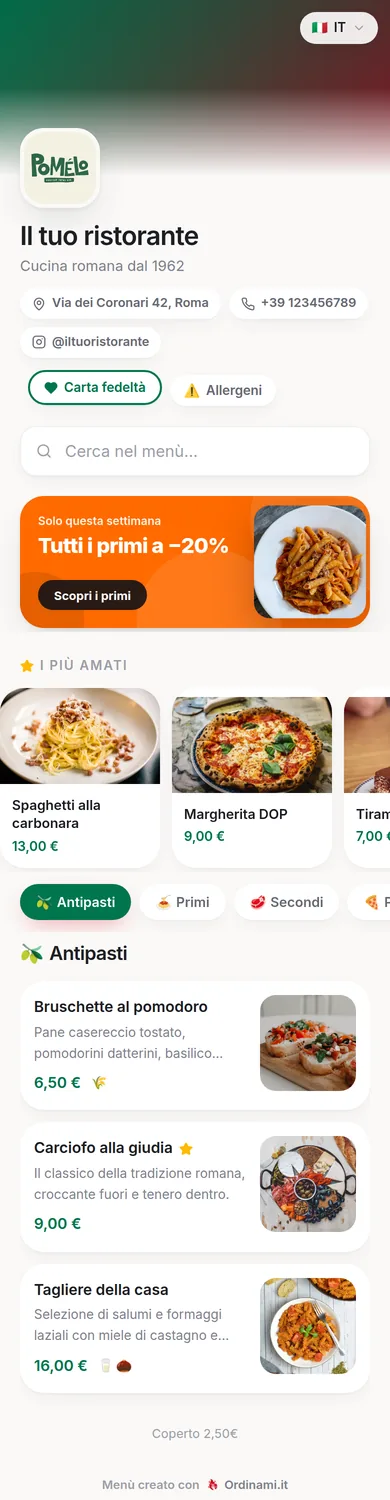
A digital menu doesn't work the same way in every venue: in a restaurant it lightens the load on the floor and showcases the dishes, in a pizzeria it tames the variants, in a bar it follows the five lives of the day, in a hotel it speaks the guests' languages. This page shows what concretely changes for each kind of venue, so you know what to expect from yours.
In the restaurant: a lighter floor and dishes that shine
In the classic restaurant the digital menu works on two fronts. The first is sales: well-crafted descriptions, photos of the star dishes and suggested pairings do the job of the silent salesperson, and the menu can be reorganised at any time to give visibility to the dishes with the best margin. The daily off-menu special — which on paper never existed because it wasn't worth a reprint — becomes a line added in thirty seconds, and it's often the best-selling dish.
The second front is operational: allergens under EU/UK rules sit next to every dish and update with the recipe, the sold-out dish gets hidden from your phone mid-service, and the seasonal change is prepared in advance and switched on the right day. With ordering from the table active, the floor staff stop taking orders and focus on bringing out dishes and looking after tables — a real relief, with staff so hard to find.
In the pizzeria: variants, big tables and second rounds
The pizzeria is perhaps the venue that gains most from going digital, for three very practical reasons. First: the pizza menu is full of variants — alternative doughs, extra toppings, half-and-half, gluten-free or lactose-free versions — which on paper become unreadable footnotes and on a digital menu are clear options for every pizza, with their allergens.
Second: the big tables. Ten people ordering out loud produce long order tickets full of changes and mistakes; with ordering from the table, everyone orders from their own phone and the ticket arrives written by the customers themselves, correct. Third: the second rounds of beer and soft drinks, the easiest margin of the evening, which start from the phone without waiting for the waiter to come back. Add the burrata that runs out at 9pm and vanishes from the menu with a tap instead of collecting refusals table by table, and the picture of the digital pizzeria is complete.
At the bar: a price list that follows the day
A bar lives several lives in a single day — breakfast, coffee break, lunch, afternoon snack, aperitivo — and the digital menu is the only format that follows them all without multiplying paper. The QR on the counter and on the tables stays the same, but what the customer sees is up to you: breakfast highlighted in the morning, lunch dishes from noon, the aperitivo list from late afternoon, and the freshly baked cake added on the fly as an off-list special.
The moment digital earns most is aperitivo on the terrace: full tables, one person on shift, and the orders for the second spritz that, with the QR, start on their own while whoever's working brings drinks out instead of collecting orders. Allergens matter more than you'd think too: pastries, sandwiches and sharing boards are full of gluten, milk and nuts, and product-by-product information avoids improvising at the counter.
In hotels and B&Bs: hospitality in six languages
In accommodation businesses the digital menu is first and foremost a hospitality tool. The QR in the room or on the breakfast table opens the menu in the guest's language: what's included in the buffet, what can be requested on top, what time it's served — without the owner acting as interpreter at every table. With the MEDIO plan the six languages update together: change the item once and the translations stay aligned.
The second use is room service and the small food offering that often exists but doesn't sell, because guests don't know it's there: the QR in the room with sharing boards, cold dishes and local wines turns an invisible service into revenue, and where ordering is active the guest orders from their phone without calling reception. Third use, the poolside or garden bar, where staff can't be permanently present: the QR on the tables collects the orders on its own.
Which plan for which venue
The choice of plan depends on what the menu has to do in your venue, and the logic is simple. The BASE plan (€29.90 a month) covers the full menu with QR, photos and allergens: it's the right starting point for the venue that wants to stop reprinting and have an always up-to-date menu. The MEDIO plan (€49.90) adds ordering from the table and 6 languages: it's the natural choice for pizzerias, bars with a terrace, venues in tourist areas and anyone with more tables than hands. The PRO plan (€69.90) rounds things off with loyalty card, review collection and statistics: it's for the venue that wants customers to come back and to decide based on data.
The detailed comparison between plans, with every feature included, is on the digital menu pricing page. And the choice isn't final: you start with BASE and move up when you need to, without changing QR or redoing the menu. To work out which one is for you, the quickest way is to create the menu and see it on your own phone.
Frequently asked questions
Is a digital menu also suitable for a small venue?
Yes: it's precisely the venues with few staff that gain the most, because updates, languages and ordering from the table take work off whoever's on shift.
Can I manage different menus for lunch and dinner?
Yes: you organise the categories and highlight them according to the time of day, from the same QR. The list follows the venue's day.
Does ordering from the table also work on the terrace?
Yes, and that's where it earns most: the customer orders from the QR on the table and the staff bring things out instead of going back and forth to collect orders.
Do I need special hardware in the venue?
No: the QRs printed on the tables and a phone, tablet or computer to manage the dashboard and receive orders are all you need.
Can I change plan later?
Yes: you can start with the BASE plan and move to MEDIO or PRO when you need ordering, languages, loyalty or statistics, without redoing the menu or the QR.