 Ordinami.it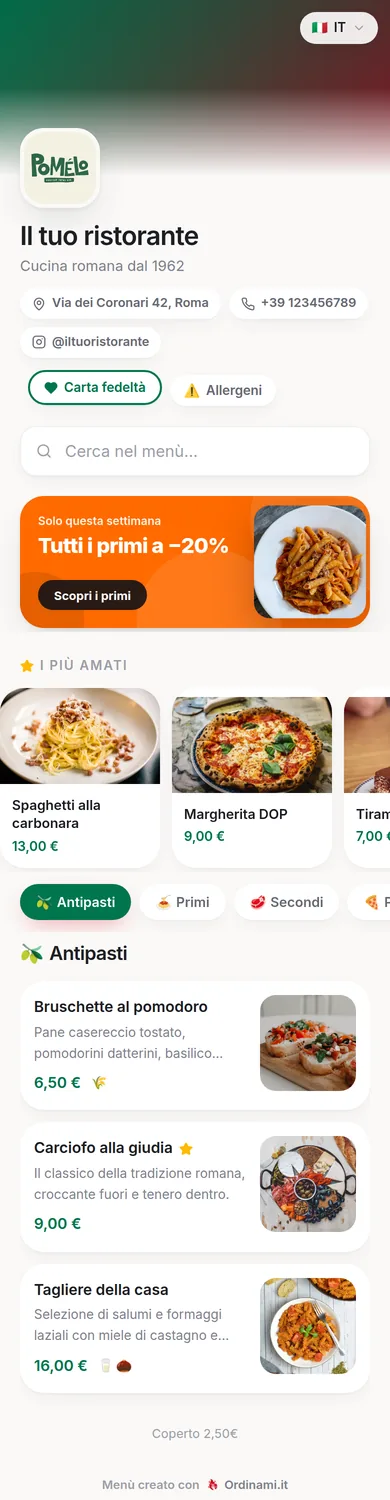
A well-made multilingual menu is worth an extra waiter in any tourist area: foreign guests read descriptions and allergens in their own language and order with confidence, without turning your staff into a team of interpreters. With Ordinami.it the menu is available in 6 languages, with automatic translations and a food glossary that protects traditional dishes from embarrassing translations. Here is how it works.
The language is chosen on first opening
When a guest scans the QR code for the first time, the menu asks them two things: which language they want to read in and whether they have any allergies. From that moment everything — categories, descriptions, variants — is in their language, and dishes containing their allergens are highlighted in red, clearly visible as they browse.
It is a huge difference from the paper menu "available in English on request", often two seasons out of date: here the choice belongs to the guest, it is instant, and the translated version is identical to the original because it is the same page. You can see the experience live in the sample menu.
6 languages, one menu to maintain
The problem with translated menus is not translating them once: it is keeping them up to date. Every new dish, every price adjustment, every daily special would have to be carried over to every version — which is why a restaurant's translated menus are almost always older than the original.
With Ordinami.it there is only one menu: you edit the dish in your own language and the automatic translations keep the other languages aligned, in real time. Six versions of the menu for the maintenance cost of one — and the tourist never runs into the dish that "isn't on the English menu".
The food glossary: translations nobody laughs at
Anyone who has travelled has met the menu translated word for word, with results that end up photographed on social media. The problem is well known: generic translators treat dish names like any other words, and every cuisine is full of names that become something else when translated literally — put cime di rapa through a word-for-word translation and you get something no diner would ever order, and the tourist smiles at the menu instead of the meal.
That is why Ordinami.it translations go through a safe food glossary: it knows which terms to translate, which to explain and which to leave in the original — because "carbonara" and "burrata" are international words by now, and a signature dish sells better under its real name with a clear description beside it.
Allergens translated and highlighted in red
The foreign guest with an allergy is the person who most needs to understand the menu and has the fewest tools to do it: they cannot read the ingredients and often cannot explain their allergy in your language. On the Ordinami.it multilingual menu, the allergens required by EU/UK rules (Regulation EU 1169/2011) travel with the translations: every dish shows its allergens in the chosen language, and the ones the guest flagged on first opening are highlighted in red.
For the dining room it means fewer difficult conversations in sign language and more safety: the mandatory information arrives in writing, clearly, in the right language — and it stays aligned with every recipe change, because it lives in the same dashboard as the menu.
Not just tourists: why it pays off anyway
The multilingual menu also works outside service hours. The menu link on your Google listing and social profiles speaks to people planning their trip: the tourist who finds your menu in their language before they even leave home puts your venue on their list. For hotels, B&Bs and venues near the attractions it is almost a requirement: a guest who understands what they are ordering orders with more confidence, and the dinner ends up in the reviews for the right reasons.
Then there is the effect on floor work: every foreign table that explains itself is time given back to service. In busy tourist venues, on full nights, it is the difference between a smooth service and a waiter turned full-time interpreter.
How to switch it on
The menu in 6 languages is included in the Ordinami.it MEDIO plan at €49.90/month, together with table ordering and dish videos — the full comparison is on the digital menu pricing page. There is nothing to translate by hand: you upload the menu in your own language and the other languages switch on by themselves.
If your menu is not online yet, that is where you start: create your account, upload dishes and allergens with the guided setup and the multilingual menu is ready on the same QR code. Immediate activation and no commitment, as with every plan.
Frequently asked questions
How many languages is the menu available in?
Six: guests pick theirs the first time they open the menu and from then on read everything translated, allergens included.
Do I have to translate the dishes by hand?
No: translations are automatic and stay aligned with every change to the menu. You only manage the menu in your own language.
Do traditional dish names get mangled by the translation?
No: the food glossary knows which terms to leave in the original — such as the names of traditional dishes — and which to translate or explain.
Are allergens visible in the translated languages too?
Yes: the allergens required by EU/UK rules (Regulation EU 1169/2011) are translated with the rest of the menu, and dishes containing the allergens flagged by the guest are highlighted in red.
Which plan includes the multilingual menu?
The MEDIO plan at €49.90/month, which also includes table ordering and dish videos.